AI & Climate Forecasting
Machine Learning & Climate Pattern Forecasting
Climate modeling has been revolutionized by the application of machine learning algorithms. These technologies enable scientists to process vast amounts of climate data from satellites, weather stations, ocean buoys, and other sources.
Advanced neural networks can identify patterns and correlations that traditional statistical methods might miss, leading to more accurate predictions of climate trends, extreme weather events, and long-term climate changes.
Deep learning models are particularly effective at handling the complexity and non-linearity of climate systems, allowing for more nuanced understanding of climate feedback loops and tipping points.
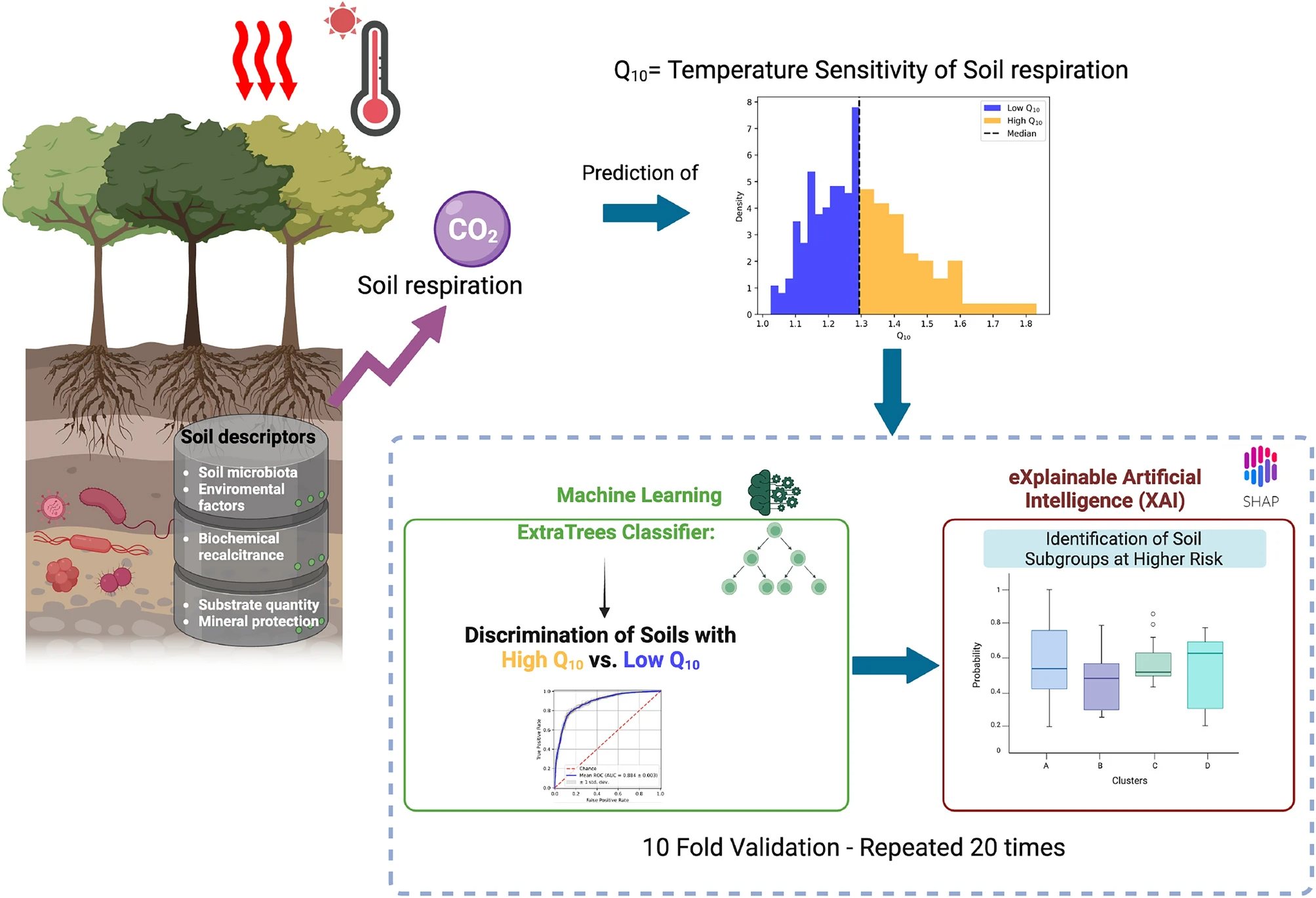
Machine learning model for climate prediction showing soil respiration analysis
Scenario Prediction & Data Pipelines
Data Collection
Satellites, sensors, weather stations, and historical records
Data Processing
Cleaning, normalization, and feature extraction
Model Training
AI algorithms learn patterns from historical data
Scenario Analysis
Forecasting multiple climate scenarios for policy decisions
Climate scenario prediction allows scientists and policymakers to explore possible future climate states under different conditions. These scenarios help in understanding potential impacts and developing appropriate mitigation and adaptation strategies.
Modern climate modeling relies on sophisticated data pipelines that transform raw environmental data into actionable insights. These pipelines handle the enormous volume, velocity, and variety of climate data, ensuring that models receive clean, consistent, and relevant inputs.
Energy Optimization with Neural Networks
Neural Networks for Renewable Energy Grids
Neural networks are increasingly being used to optimize renewable energy systems. These AI models can:
Predict Energy Production
Forecast solar and wind energy output based on weather predictions, enabling better grid management and reducing the need for fossil fuel backups.
Optimize Energy Distribution
Balance electricity supply and demand in real-time, reducing waste and ensuring stability in grids with high renewable penetration.
Manage Energy Storage
Determine optimal charging and discharging patterns for battery systems, maximizing the use of renewable energy and extending battery life.
By applying neural networks to renewable energy systems, we can significantly increase the efficiency and reliability of clean energy sources. This technology is crucial for accelerating the transition away from fossil fuels and reducing the carbon footprint of our energy systems.